
On this page
The best B2B lead generation tools for most SaaS teams are Apollo.io for contacts and outreach, HubSpot for inbound leads and LinkedIn Sales Navigator for finding buyers on LinkedIn. Larger teams add ZoomInfo for data and Clay for enrichment. Instantly, lemlist, RB2B and Leadfeeder each fill a narrower gap: cold email, multichannel outreach or website visitors.
This post compares 11 tools on use case, pricing model and fit, with prices from each vendor's own website, checked on 9 November 2026.
I work at Fourward, which publishes this guide. One entry is ours: the free AI visibility check, listed last. Every other fact comes from that company's own website, checked on 9 November 2026. No vendor paid to be included.
- A B2B lead generation tool is software that helps you find, reach or capture potential buyers at other companies, from contact databases to cold email and website visitor tools.
- Most SaaS teams need two or three jobs covered: finding contacts, reaching them and capturing buyers who come to you.
- Paid entry plans in this guide run from $7 or $20 a seat a month (HubSpot Starter) to $167 a month (Clay Launch). ZoomInfo publishes no prices.
- The pricing model matters more than the entry price. Tools charge per user, per credit, per email volume or by custom quote.
- Outbound tools only reach buyers you already know about. The buyers who search for your category find you through your own pages, as our guide to SEO for B2B SaaS explains.
What a B2B lead generation tool does
A lead is a person or company that might buy from you. A lead generation tool helps you find those people, reach them, or catch them when they come to you.
You will see the same terms on most pricing pages:
- Ideal customer profile (ICP)The type of company and job title most likely to buy from you.
- Contact dataNames, work emails, phone numbers and job titles, sold by databases such as Apollo.io, ZoomInfo and Lusha.
- EnrichmentAdding missing details, such as company size or a work email, to a lead you already have.
- SequenceA planned series of emails or LinkedIn steps that a tool sends on a schedule until the person replies.
- Visitor identificationMatching visits to your website with the company, or sometimes the person, behind them.
- CreditsThe unit many tools charge in. Each tool sets what a credit buys, such as revealing one email address.
Write down your ICP before you buy any tool. A database is only useful when you know which companies and job titles to search for.
Four kinds of lead generation tool
The 11 tools below do four different jobs. Most SaaS teams need one tool from two or three of these groups, not all of them.
Databases of companies and people you can search and save.
Best when you know your ICP and need names to contact.Apollo.ioZoomInfoLushaSales NavigatorTools that add details to leads and send sequences.
Best when you have a list and need replies.ClayInstantlylemlistTools that name the companies or people on your site.
Best when you get traffic but few form fills.RB2BLeadfeederForms, email and checks that help buyers find and contact you.
Best when buyers already search for your category.HubSpotFourward checkHow I picked them
I started from the tools SaaS teams name most often for finding and reaching buyers. I kept one or two picks for each job, so the list covers a whole stack rather than 11 versions of one tool.
On 9 November 2026 I checked each tool's own pricing page for plans, prices and free options. I didn't create accounts or run tests, so nothing here claims hands-on results. The order runs from the broadest tools to the most specific, with our free check last.
The best B2B lead generation tools at a glance
The same five facts for every tool. Prices are in US dollars unless marked. Scroll the table sideways on a phone.
| Tool | Best for | Pricing model | Paid plans from | Free option |
|---|---|---|---|---|
| Apollo.io | Contacts and outreach in one tool | Per user, plus credits | $49 a user a month, billed annually | Free plan, 900 credits a year |
| HubSpot Marketing Hub | Capturing inbound leads | Per seat | $7 or $20 a seat a month, by billing period | Free tools |
| ZoomInfo | Deep data for larger teams | Custom quote | Not published | Free trial on sales plans |
| LinkedIn Sales Navigator | Finding buyers on LinkedIn | Per license | US$119.99 a month | Free trial |
| Clay | Enrichment and account research | Data credits and actions | $167 a month on the plan card | Free plan, 100 data credits a month |
| Lusha | Quick contact lookups | Credits | See its pricing page | Free plan, 40 credits a month |
| Instantly | Cold email at volume | Emails and contacts a month | $47 a month | Start with no credit card |
| lemlist | Email, LinkedIn and calls together | Monthly or yearly plan | $69 a month, or $55 billed yearly | 14-day free trial |
| RB2B | Naming US visitors to your site | Resolutions a month | $79 a month | Free plan, company level |
| Leadfeeder | Naming companies that visit your site | Monthly price, billed annually | €79 a month, billed annually | Free Lite plan |
| Fourward AI visibility check | Being found when buyers ask AI | Free | Free | Yes |
1. Apollo.io
Best for Startups and small sales teams that want contact data and email sequences in one tool.
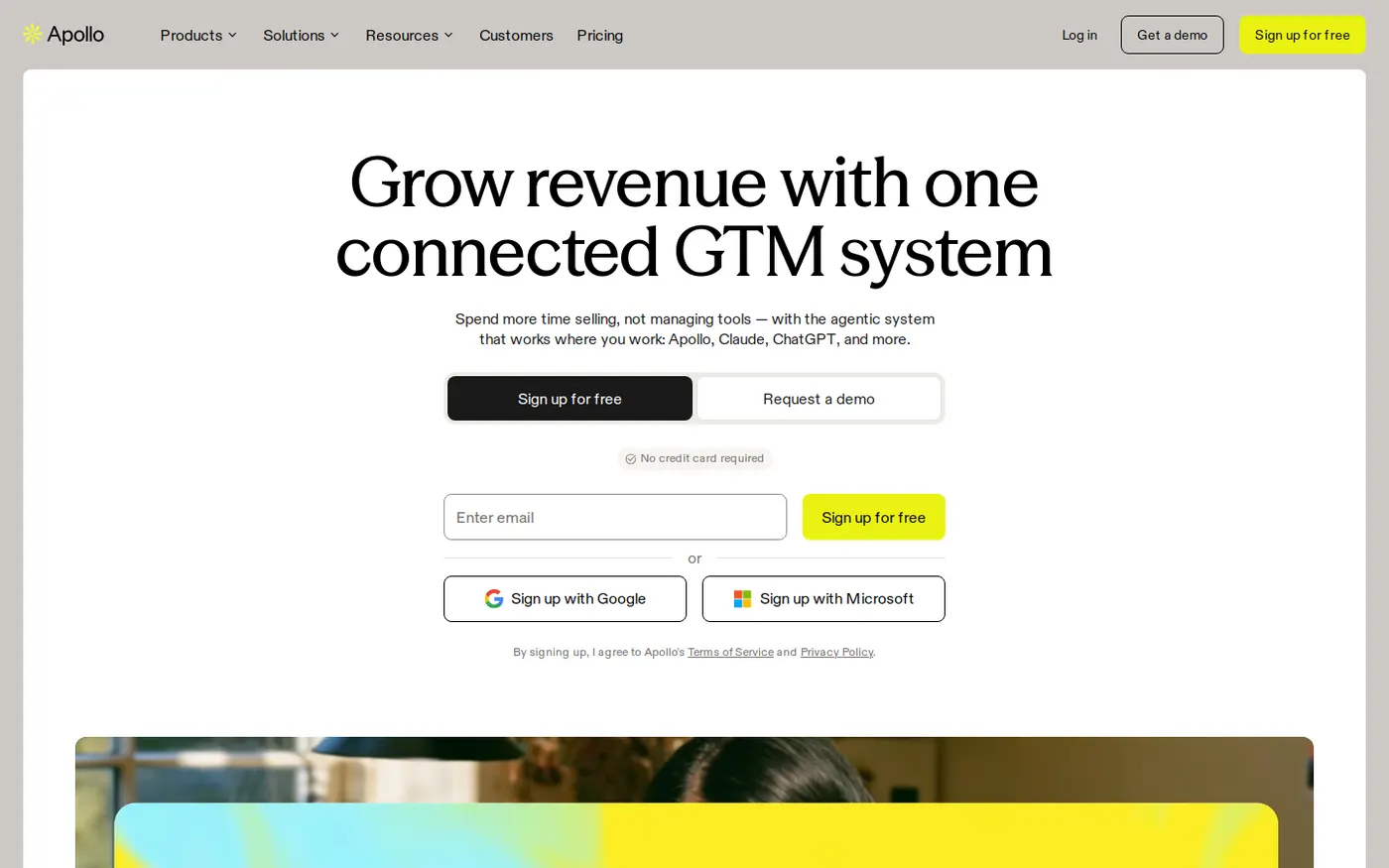
Apollo.io combines a contact database with outreach. You search for people who match your ICP, save them and send email sequences from the same place.
Apollo.io is a sensible first tool for a SaaS team starting outbound. Outbound means sales that begins with you contacting the buyer, not the buyer contacting you.
- Main jobContact data and email sequences in one place. The Basic plan includes email sequencing and core integrations.
- Pricing modelPer user, with credits for data.
- PricingApollo's own comparison page, dated 13 May 2026, lists Basic from $49 a user a month, billed annually. Comparison page
- Higher plansProfessional is $79 a user a month, with 48,000 credits a year and a US dialer. A Custom plan adds SSO (single sign-on) and advanced security.
- Free optionA free plan with 900 credits a year, 2 sequences and basic filters. Free plans connect Gmail accounts only.
My take Apollo.io is the best place for most SaaS teams to start. Basic already includes email sequencing, so you may not need a separate cold email tool in your first months.
2. HubSpot Marketing Hub
Best for SaaS teams whose leads come from their own website, events or content.
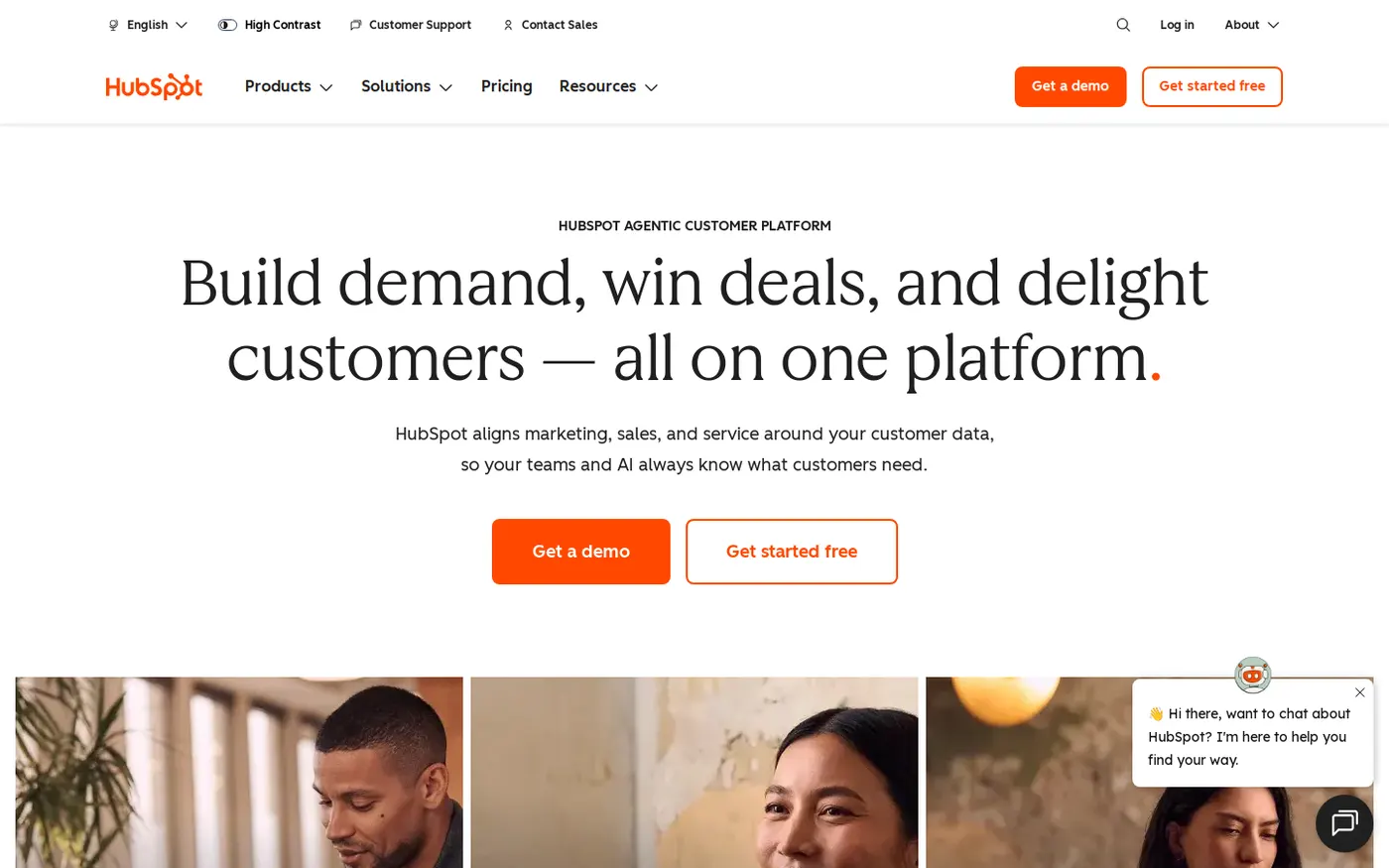
HubSpot is a CRM (customer relationship management system), the database where your leads and deals live. HubSpot's Marketing Hub covers the inbound side: capturing leads, emailing them and measuring what works.
HubSpot is not a contact database, so it fits best once buyers already come to you through search, ads, events or AI answers.
- Main jobCapturing, emailing and tracking inbound leads.
- Pricing modelPer seat.
- PricingStarter is shown at $7 or $20 a seat a month, depending on the billing period you pick. Professional starts at $800 a month and includes 3 core seats. Pricing page
- Free optionFree tools to start "generating and emailing new leads, and measuring your success".
My take HubSpot is a good home for your leads, whichever other tools you buy. Professional is a big step up from Starter, so list the features you need before you upgrade.
3. ZoomInfo
Best for Larger sales and marketing teams that need deep company data and can work with a custom quote.
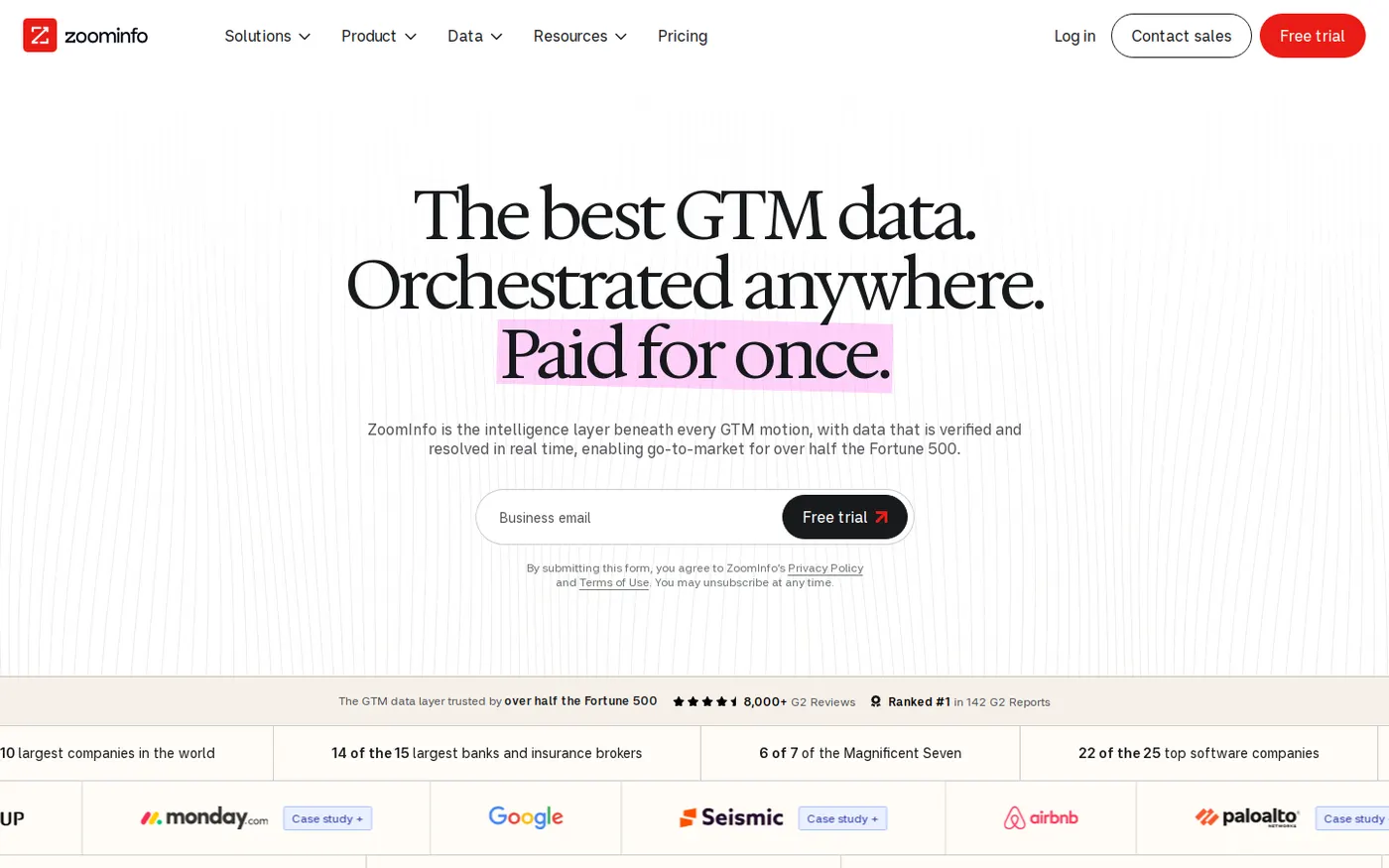
ZoomInfo sells company and contact data, with separate plans for sales and marketing teams. ZoomInfo's sales plans are ZoomInfo Professional, Copilot Advanced and Copilot Enterprise.
ZoomInfo's marketing plans are Marketing Demand, ABM Lite and ABM Enterprise. ABM (account-based marketing) means marketing aimed at a set list of target companies.
- Main jobCompany and contact data for teams that prospect every day.
- Pricing modelCustom quote. ZoomInfo says it "offers flexible packages across a variety of solutions".
- PricingNo prices are published. The quote depends on criteria that ZoomInfo lists on its pricing page.
- Free optionA free trial on the three sales plans. The marketing plans start with a demo.
My take ZoomInfo is worth the sales call once several people prospect every day. A seed-stage team can start on Apollo.io's free plan and move up later.
4. LinkedIn Sales Navigator
Best for Founders and sellers who find and research buyers on LinkedIn.
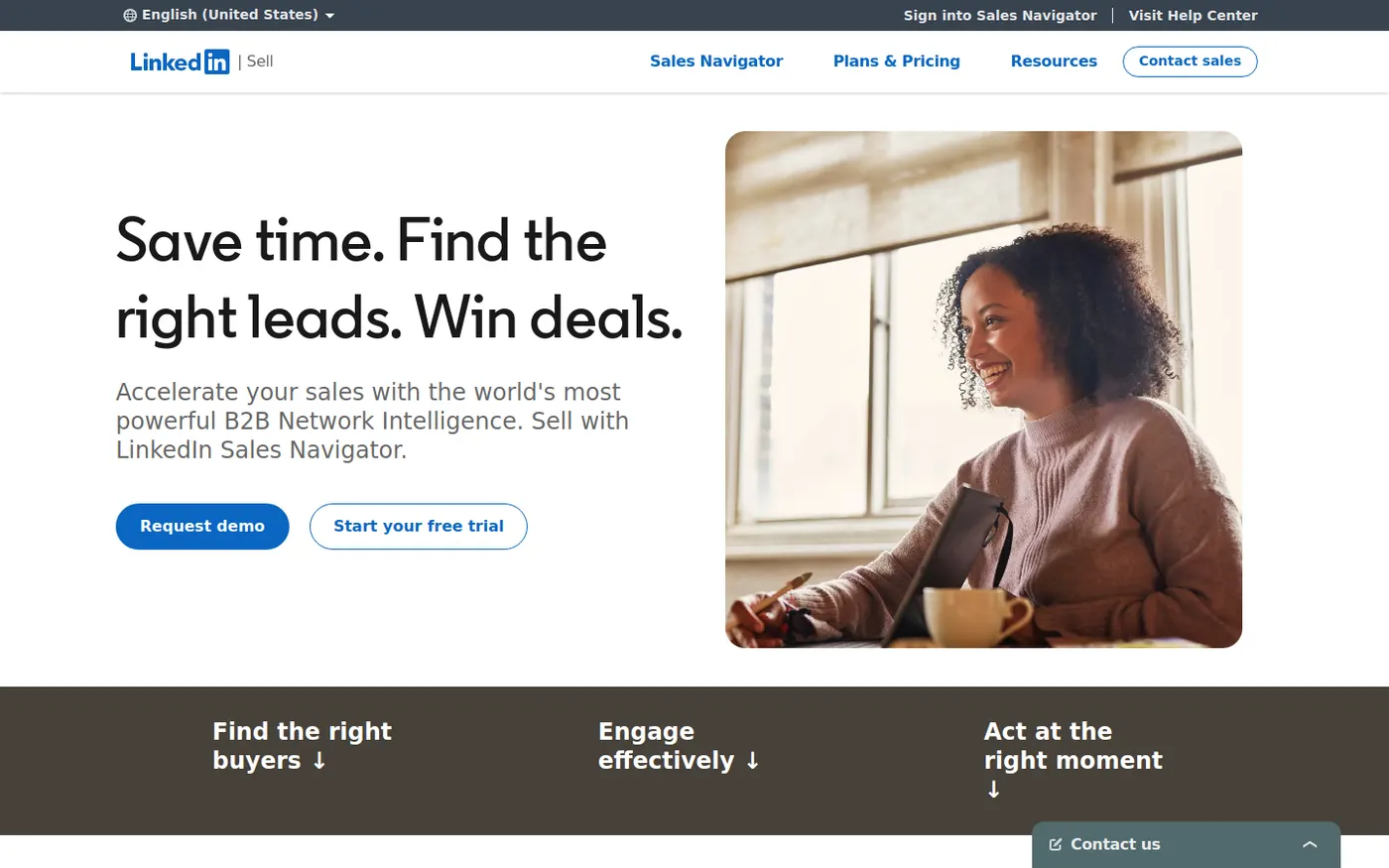
LinkedIn Sales Navigator is LinkedIn's paid tool for sales teams. Sales Navigator comes in three plans: Core, Advanced and Advanced Plus.
For B2B SaaS founders, it is a natural place to start selling. Your buyers already list their job title and company on LinkedIn, which makes them easier to find.
- Main jobFinding and researching buyers on LinkedIn.
- Pricing modelPer license.
- PricingCore starts at US$119.99 a month per license, or US$1,079.88 a year. Advanced and Advanced Plus are the higher plans. Compare plans
- Free optionA free trial of Core or Advanced, using your LinkedIn account.
My take Sales Navigator is a strong first buy for founder-led sales. Pair it with a contact data tool when you want to email those people outside LinkedIn.
5. Clay
Best for Growth and RevOps (revenue operations) teams that want to combine many data sources and automate account research.
Clay is a tool for enrichment and research. You bring a list of companies or people, and Clay fills in the details and runs steps on each one.
Clay charges in two units. Data credits are spent when you buy data from Clay's marketplace. Actions are counted as a separate monthly allowance.
- Main jobEnrichment and custom research on lists you already have.
- Pricing modelData credits and actions, per month.
- PricingThe Launch plan card shows $167 a month for 2,500 data credits and 15,000 actions. The FAQ on the same page says Launch starts at $185 a month, so confirm at checkout. Pricing page
- Free optionA free plan with 100 data credits and 500 actions a month.
My take Clay is the most flexible tool in this list, and the one that needs the most setup. Buy it when someone on the team will own the workflows, not as your first tool.
6. Lusha
Best for Sellers who want quick email and phone lookups on a simple credit plan.
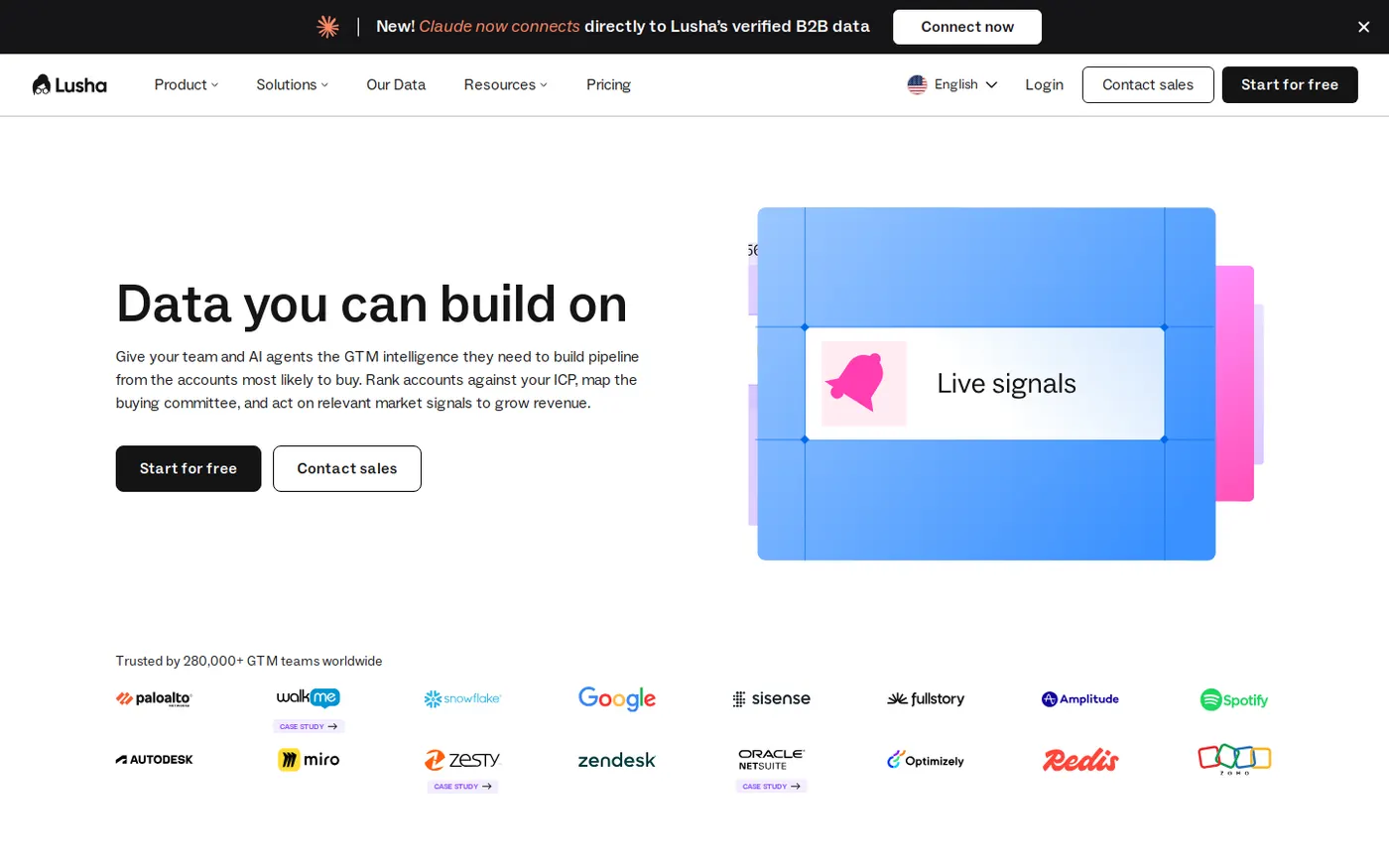
Lusha is a contact data tool. Lusha's pricing page calls its credit system "your way to access contact data", so you spend credits to reveal a person's details.
The free plan is enough to test whether Lusha's data covers your market before you pay.
- Main jobContact lookups for individual sellers.
- Pricing modelCredits, per month.
- PricingPaid plans add more credits. Check the current price on Lusha's pricing page before you budget.
- Free optionA free plan with up to 40 credits a month.
My take Lusha is worth testing next to Apollo.io. Try both free plans on a sample of your target accounts and keep the one with better matches.
Free check. 30 checks, one score out of 100, under a minute.
7. Instantly
Best for Teams that send cold email at volume from many inboxes.
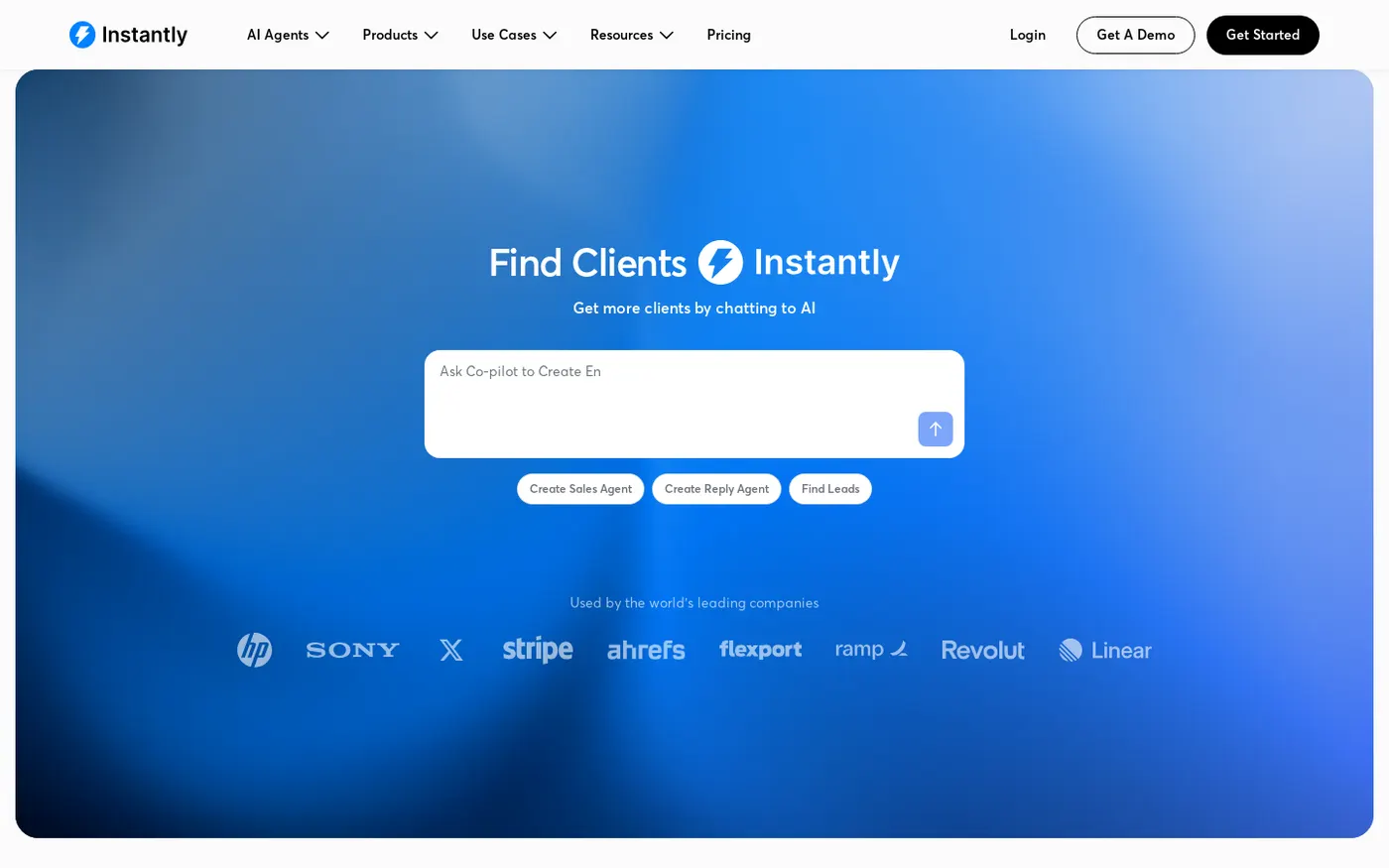
Instantly is built for cold email. Instantly sells separate plans for outreach, leads and a CRM, and its Growth outreach plan includes unlimited email accounts.
Deliverability means whether your emails land in the inbox instead of spam. Spreading sends across several inboxes helps protect deliverability, which is why the number of accounts matters.
- Main jobCold email sequences across many inboxes.
- Pricing modelMonthly plan, sized by emails and contacts.
- PricingGrowth is listed at $47 a month, with 5,000 emails a month and 1,000 uploaded contacts. Pricing page
- Free optionYou can start with no credit card.
My take Instantly is the pick when email volume is what holds you back. The Growth plan's 5,000 emails a month suits a small team, so check the higher plans before you scale up.
8. lemlist
Best for Teams that want email, LinkedIn steps and calls in one sequence.
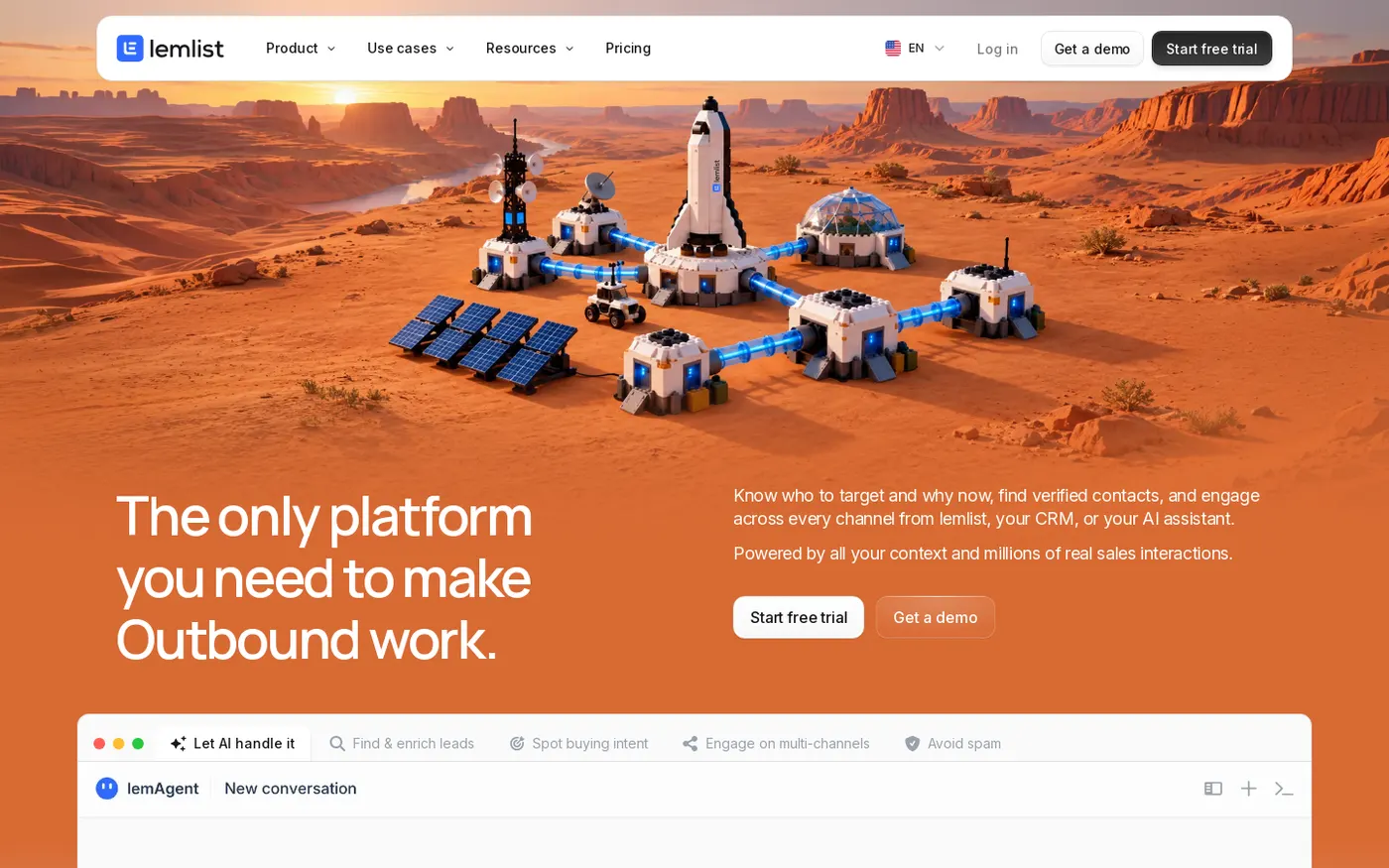
lemlist is an outbound tool that can mix channels. lemlist's Email plan is "for teams that want to go big on email".
lemlist's Multichannel plan adds LinkedIn and calls to the same sequence. Multichannel helps when buyers ignore cold email but reply on LinkedIn.
- Main jobMultichannel outreach: email, LinkedIn and calls.
- Pricing modelMonthly plan, cheaper when billed yearly.
- PricingEmail is $69 a month, or $55 a month billed yearly. Multichannel is $109 a month, or $87 billed yearly. Pricing page
- Free optionA 14-day free trial.
My take lemlist is the better fit when one channel is not enough. If email alone gets replies, Instantly or Apollo.io may cover what you need.
9. RB2B
Best for SaaS teams selling in the US that want to know which people visit their site.
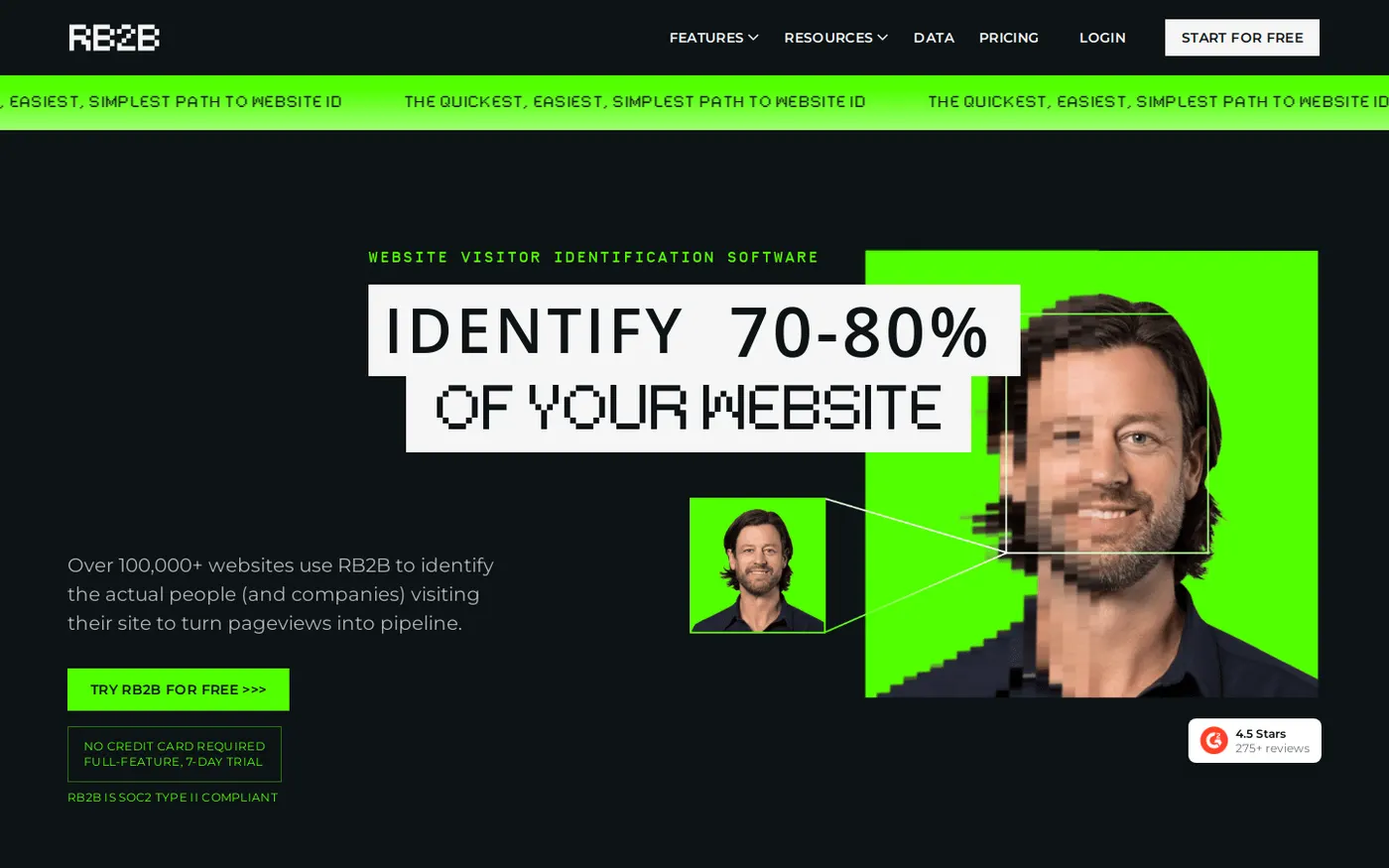
RB2B identifies visitors to your website. RB2B names the company behind a visit on every plan. From the Starter plan, RB2B can also name the person and send their LinkedIn URL to Slack or Teams.
RB2B says company-level identification is global on every plan. Person-level identification is US only.
- Main jobNaming the companies, and US people, who visit your site.
- Pricing modelMonthly plan, sized by resolutions: the visitors it matches to a company or person.
- PricingStarter is $79 a month, with person-level identification and 300 resolutions a month. Pricing page
- Free optionA free plan with company-level identification and 150 resolutions a month.
My take RB2B is a quick way to see who reads your pricing page. Person-level data raises privacy questions, so get legal advice for your market before you email those visitors.
10. Leadfeeder
Best for Teams that want to see which companies visit their site, with a free plan to start.
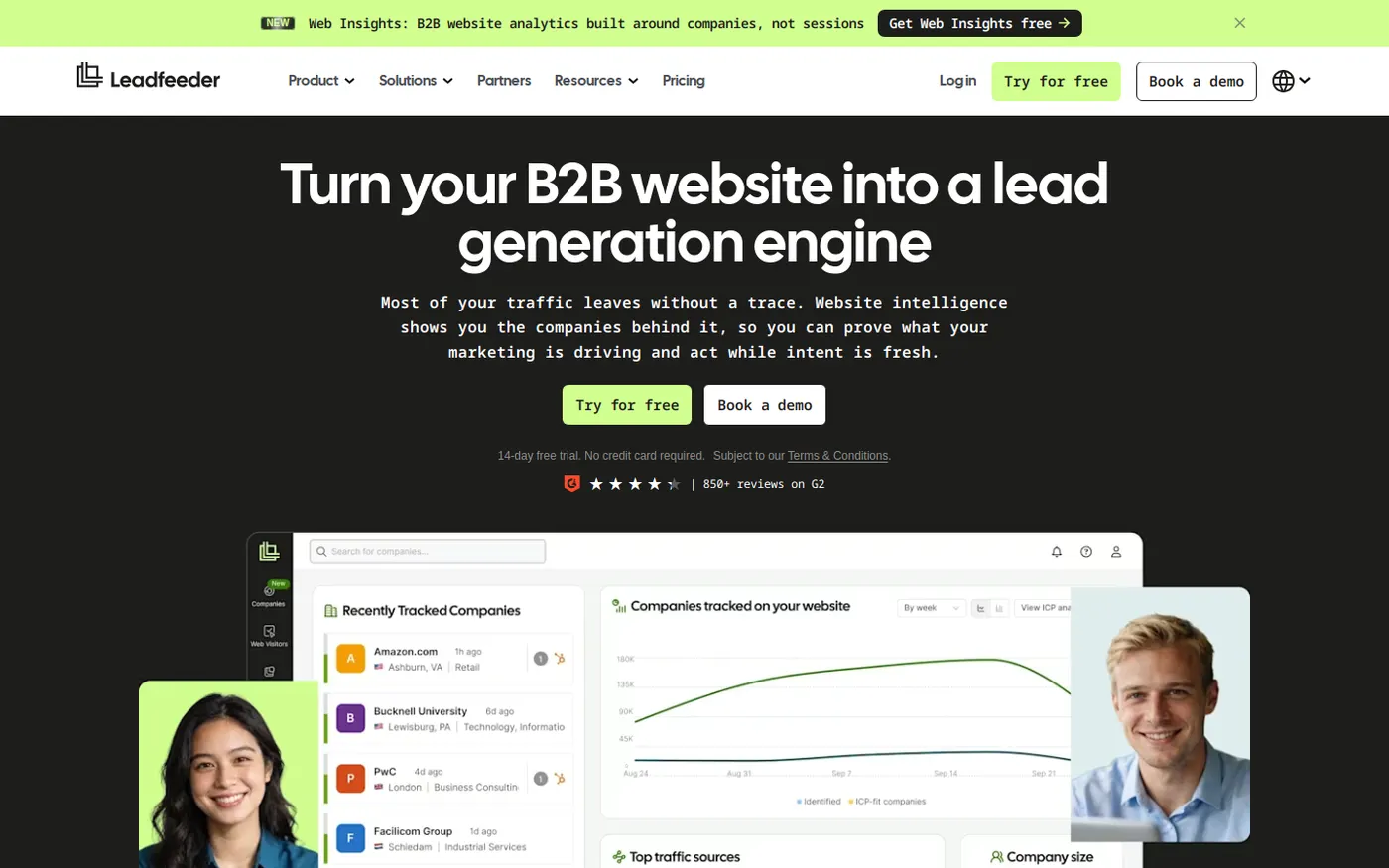
Leadfeeder, part of Dealfront, is "website visitor identification software that reveals the B2B companies visiting your site".
Leadfeeder reports companies, so it shows which accounts are interested. You then find the right person to contact with another tool.
- Main jobNaming the companies that visit your site.
- Pricing modelMonthly price, billed annually.
- PricingDiscover starts at €79 a month, billed annually. Pricing page
- Free optionLite shows the last 100 identified companies and a 7-day history, with unlimited users.
My take Leadfeeder is a good fit when company-level data is enough. Spot target accounts reading your site, then reach the right people with Sales Navigator or Apollo.io.
11. Fourward AI visibility check
Best for SaaS teams that want buyers to find them when they ask AI tools for a shortlist.
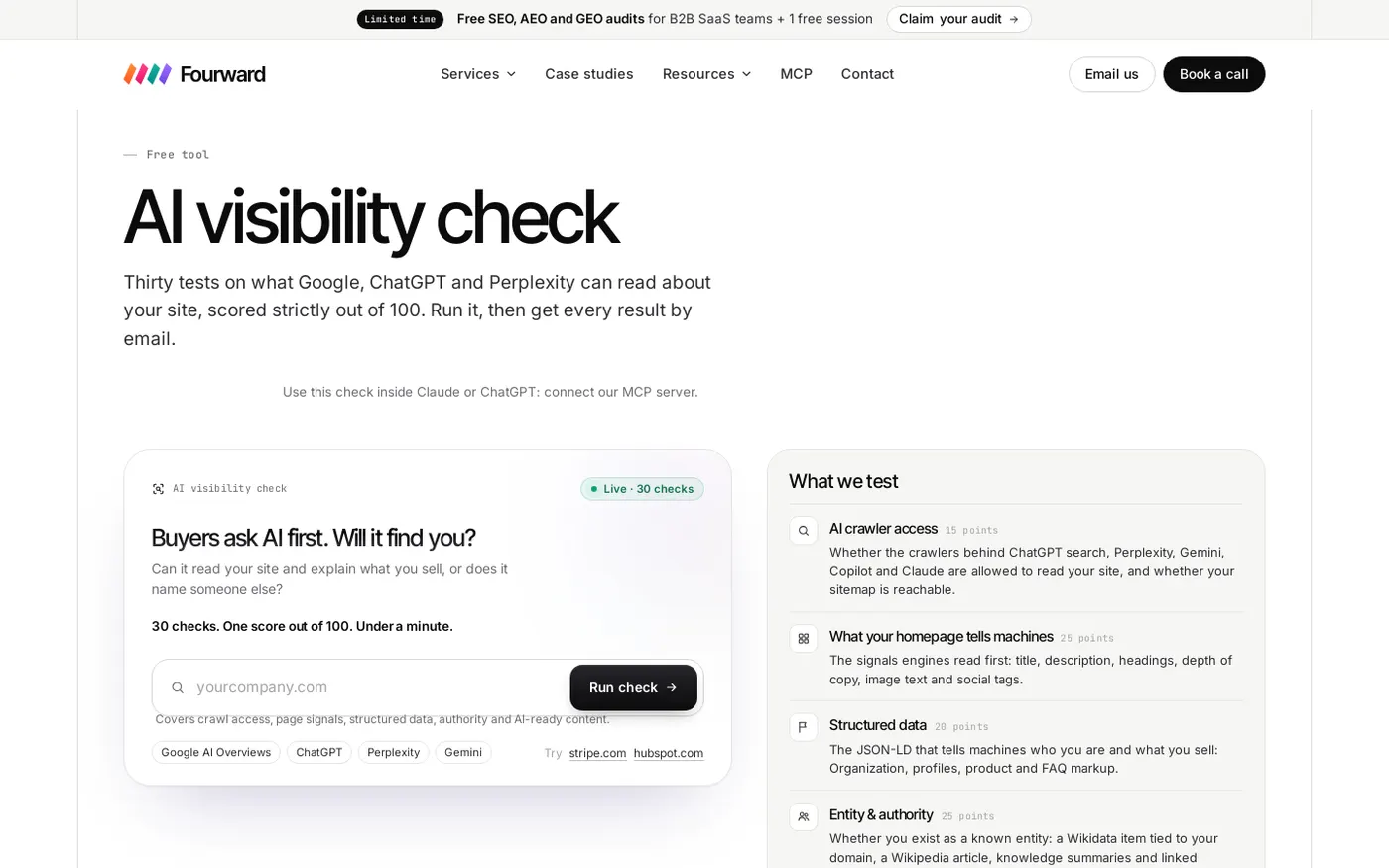
Every tool above helps you find or reach buyers. Buyers can now also ask ChatGPT, Perplexity or Google's AI answers which tools to consider before they talk to sales.
I built this free check to show what those engines can read about your site. The check doesn't find contacts or send email, so it won't replace any tool above.
- Main jobChecking what AI engines can read about your site.
- Pricing modelFree.
- What it checksIt runs 30 checks on what AI engines can read about a site.
- Related free toolOur AI crawler checker tests 20 AI crawlers, your robots.txt file and your firewall. Robots.txt is the file that tells crawlers what they may read.
My take Run it before you spend more on outbound, because it is free. Our guide to GEO (generative engine optimization) for B2B SaaS explains what to fix next. Run the free check.
What B2B lead generation tools cost
The entry price is only part of the cost. The pricing model decides what you really pay once a team uses the tool every day.
- Per user or seatApollo.io, HubSpot and Sales Navigator. The bill grows with every seller you add.
- CreditsApollo.io, Clay and Lusha. The bill grows with the number of contacts you reveal or enrich.
- VolumeInstantly and RB2B. Plans are sized by emails, contacts or identified visitors a month.
- Custom quoteZoomInfo. You learn the price on a sales call.
The cheapest paid plan for each tool, from lowest to highest price, as published on 9 November 2026:
| Tool | Entry paid plan | Price | How the bill grows |
|---|---|---|---|
| HubSpot Marketing Hub | Starter | $7 or $20 a seat a month, by billing period | Per seat |
| Instantly | Growth | $47 a month | Emails and contacts |
| Apollo.io | Basic | $49 a user a month, billed annually | Per user, plus credits |
| lemlist | $69 a month, or $55 billed yearly | Plan level and channels | |
| RB2B | Starter | $79 a month | Resolutions |
| Leadfeeder | Discover | €79 a month, billed annually | Plan level |
| LinkedIn Sales Navigator | Core | US$119.99 a month, or US$1,079.88 a year | Per license |
| Clay | Launch | $167 a month on the plan card, $185 in the FAQ | Data credits and actions |
| ZoomInfo | Custom | Not published | Custom quote |
Lusha is not in this table because I couldn't confirm its paid price on its pricing page. Its free plan gives up to 40 credits a month.
Price your real usage, not the entry plan. Count your sellers, the contacts you will reveal and the emails you will send each month.
Would you rather have a team run lead generation for you? Our guide to the best B2B SaaS marketing agencies compares agencies on services, pricing and fit.
How to choose a lead generation stack
A stack is the set of tools you use together. Pick the tool for the job you need done first, then add another only when that job works.
| Your situation | Start with | Why |
|---|---|---|
| You have no outbound yet and a small budget | Apollo.io | Contacts and sequences, with a free plan |
| Most leads come from your website | HubSpot Marketing Hub | Free tools, then Starter |
| Founders sell through LinkedIn | LinkedIn Sales Navigator | Free trial, then US$119.99 a month |
| Several people prospect every day | ZoomInfo | Custom package, free trial on sales plans |
| You need custom research on each account | Clay | Free plan with 100 data credits a month |
| You send a lot of cold email | Instantly | 5,000 emails a month on Growth |
| You want email, LinkedIn and calls in one flow | lemlist | Multichannel from $87 a month, billed yearly |
| You want to know who visits your pricing page | RB2B or Leadfeeder | Both have free plans |
| Buyers ask AI tools for a shortlist | Fourward AI visibility check | Free, 30 checks |
Three starter stacks by stage
- Founder-led sales. Sales Navigator for research, Apollo.io's free plan for emails and sequences, and HubSpot's free tools as your CRM.
- First sales hires. Apollo.io Basic or Professional, Instantly or lemlist for outreach, and RB2B or Leadfeeder to spot accounts already on your site.
- A larger sales team. ZoomInfo or Clay for data, HubSpot Professional for inbound, and a dedicated outreach tool.
Two or three tools that someone runs every week beat a full stack that nobody owns.
Mistakes to avoid
Avoid these six mistakes when you buy lead generation tools.
- Buying data before you write your ICP. Without a clear target, you pay for contacts who will never buy.
- Paying twice for the same job. Apollo.io Basic already includes email sequencing, so test it before you add Instantly or lemlist.
- Ignoring the credit math. Work out how many contacts you will reveal each month, and check what each credit buys.
- Sending cold email from your main domain. Send outreach from a separate domain set up for it, so spam complaints don't hit your everyday company email.
- Treating visitor data as permission. A visit is not consent to contact. Check privacy rules such as GDPR (General Data Protection Regulation) in the EU before you use person-level data.
- Buying tools nobody has time to run. Every tool needs an owner. If you are still deciding who that is, compare the cost of in-house marketing vs an agency.
A full SEO, AEO and GEO audit, plus 30 minutes with our team to walk you through it.
FAQs
What is the best B2B lead generation tool?
For most SaaS startups, Apollo.io is the best first tool, because it combines contact data and email sequences and has a free plan. Larger teams can add ZoomInfo or Clay for data. HubSpot is the pick for inbound leads, and Sales Navigator for LinkedIn.
How much do B2B lead generation tools cost?
Paid entry plans in this guide run from $7 or $20 a seat a month for HubSpot Starter to $167 a month for Clay Launch. ZoomInfo is priced by custom quote. Many tools also have a free plan.
Is there a free B2B lead generation tool?
Apollo.io, HubSpot, Clay, Lusha, RB2B and Leadfeeder all have free plans or free tools, with limits. Fourward's free AI visibility check doesn't find contacts, but it shows what AI engines can read about your site.
Should a SaaS startup choose Apollo.io or ZoomInfo?
Start with Apollo.io: it has a free plan and lists Basic from $49 a user a month, billed annually. ZoomInfo is priced by custom quote, with a free trial on its sales plans. Revisit it once several people prospect every day.
Do I need a separate cold email tool?
Not at first, because Apollo.io Basic includes email sequencing. Add Instantly when you need more sending volume, or lemlist when you want LinkedIn steps and calls in the same sequence.
What is website visitor identification?
It matches visits to your site with the company or person behind them. RB2B names companies on every plan and US people from its Starter plan. Leadfeeder names the companies that visit.
Sources
- Apollo.io Pricing Plans and Apollo vs ZoomInfo: Pricing, Features and Data Compared (2026), Apollo, dated 13 May 2026, checked 9 November 2026.
- Marketing Software Pricing, HubSpot, checked 9 November 2026.
- Pricing and Plans, ZoomInfo, checked 9 November 2026.
- Compare Plans and Pricing, LinkedIn Sales Navigator, LinkedIn, updated 27 September 2026, checked 9 November 2026.
- Compare plans, features and costs, Clay, checked 9 November 2026.
- Lusha Pricing, Lusha, checked 9 November 2026.
- Pricing: Plans for Outreach, Leads, and CRM, Instantly, checked 9 November 2026.
- lemlist pricing, lemlist, checked 9 November 2026.
- RB2B pricing and plans, RB2B, checked 9 November 2026.
- Pricing, Leadfeeder (Dealfront), checked 9 November 2026.